Friday, 23 September 2016

Assessment

Maths Assessment

Identify classes of two- and three-dimensional shapes by their geometric properties
Assessment task:

Complete this task and then add it to a blog post.

Identify classes of two- and three-dimensional shapes by their geometric properties
Assessment task:

Complete this task and then add it to a blog post.
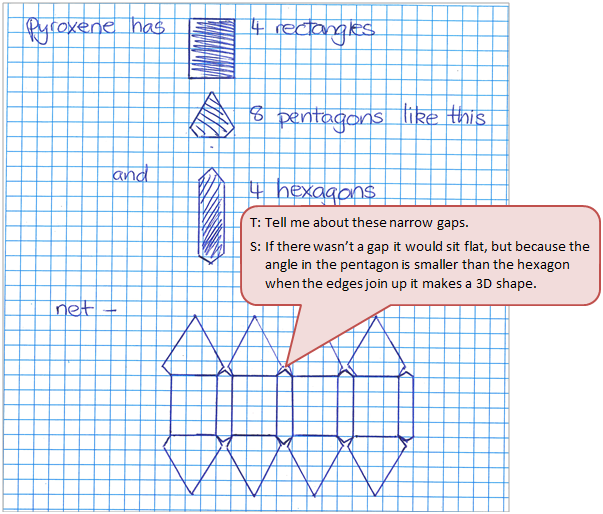


Image result for pyroxene nzmaths


Thursday, 22 September 2016

Art

Art


Blog Post - Use this model for your Visual Art blog post.

Visual Art: WALT: Apply knowledge about shapes and patterns derived from nature into an original artwork

For Visual Art the SOLO level I achieved was:

The 3 Visual Art techniques I used in my art work to achieve this level were:

Here is a photo of my artwork:


My next step in visual art is:
Not rush what I am doing like painting and using the vivid

Friday, 16 September 2016

Koru Games

Koru Games


The activity I did was: Touch rugby

Two highlights of Koru games for me was: 
1. Scoring a try because it was my first try ever.
2. Being a great team player because even though we lost all but 1 game I didn't get mad.

I am most proud of Scoring a try because it was my first try ever.

Next year I want to play a different sport, I'd like to play Volleyball first and Soccer second.

Friday, 2 September 2016

Water cycle

Water cycle

Here is the Water ways modeling book LINK


Here is my information report on the Water cycle 


Water cycle


The water cycle is a process that water goes between land and sea also the atmosphere. The water cycle doesn’t start or stop it goes on forever and keeps getting recycled.


Water covers probably 70% of earth. The other 30% is land. Heat from the sun hits the water and then creates Evaporation with her turns into gas and goes into the clouds. Evaporation is a vapor. Energy from the sun turns the water into vapor. Evaporation is invertible so you can’t see what is happening. Condensation and Precipitation are both parts of the water cycle, Evaporation creates Condensation and Precipitation.


Condensation  and Precipitation are both the coldest parts of the water cycle. Condensation is just like steam say you have a pot on the stove put a clear lid on it. After awhile take of the lid and see the Condensation. Condensation is the stuff that you see on your window when your house is warm and it's cold outside it turns into Consideration. Precipitation is pretty much just rain,hail,snow and sleet. So it is mostly cold weather. The water heads down a hill into the river that is called runoff and groundwater.


Runoff comes from the mountains and groundwater comes from the runoff. Only 35% of runoff ends up at sea and ocean the other 65% is talkin by dirt. The water from the mountains heads to the rivers and makes runoff,runoff is what we drink. Groundwater is what we drink but the people who supplies the water clean it so we can drink it and so we don’t get sick.

The water cycle is very important if there was no water cycle we wouldn’t be alive right now to tell you this.

Thursday, 25 August 2016

Using a range of multiplicative strategies.

In Maths we have been learning to use a range of multiplicative strategies when operating with whole numbers.


The strategies we have been learning are:


- Estimate the reasonableness of large problems like 1 788 – 891. Could 497 be right?
- Use multiplication to solve addition and subtraction problems eg.
  64 – 48 = as (8 x 8) – (6 x 8) = 2 x 8= 16
- Use doubling / halving, trebling/ thirding and adjusting to solve multiplication problems,
 eg.  12 x 50 solved as 4 x 150= 600
- Use an algorithm to solve multiplication problems.
- Solve problems using simple cube numbers .
- Use an algorithm to solve division problems.

MATHS Rich Assessment Task

WALT:  Use appropriate scales, devices, and metric units for length, area, volume and capacity, weight
Oranges
Measuring is about making a comparison between what is being measured and a suitable measurement unit. Central to the development of measuring skills is lots of practical measuring experience. Also important is the reality that measurement is never exact.
Required Resource Materials:
  • Oranges
  • Measuring equipment including; rulers, scales, measuring jugs.
Activity: Complete the questions below:
  1. How can you measure an orange? (there will be multiple answers for this, list as many as you can think of). Think of the attributes of an orange eg juice.
  2. Choose two of these attributes of an orange to measure and carry out the task. Write up a proposal for your investigation, including details on:
    • Attribute being measured
    • Equipment required
    • Method (step by step)
    • How will you present your results?
    • Write up your results
  1. What were successful/unsuccessful approaches to measuring each of your chosen Attributes? Why?
  2. Choose 4 other objects to measure in the class - use 4 different measurements eg measure the length of something and the weight of something else. Write up your results in a table.


Skin
Hole
Inside the orange
Juice
65 Grams
200 Grams
62 Grams
25 Grams


Altogether after deconstructed
175


Pencil case
Ipad
Shoe
Couch
300 grams
20 cm
6 cm
80 cm
Weight               Length               Width              Height

Friday, 29 July 2016